
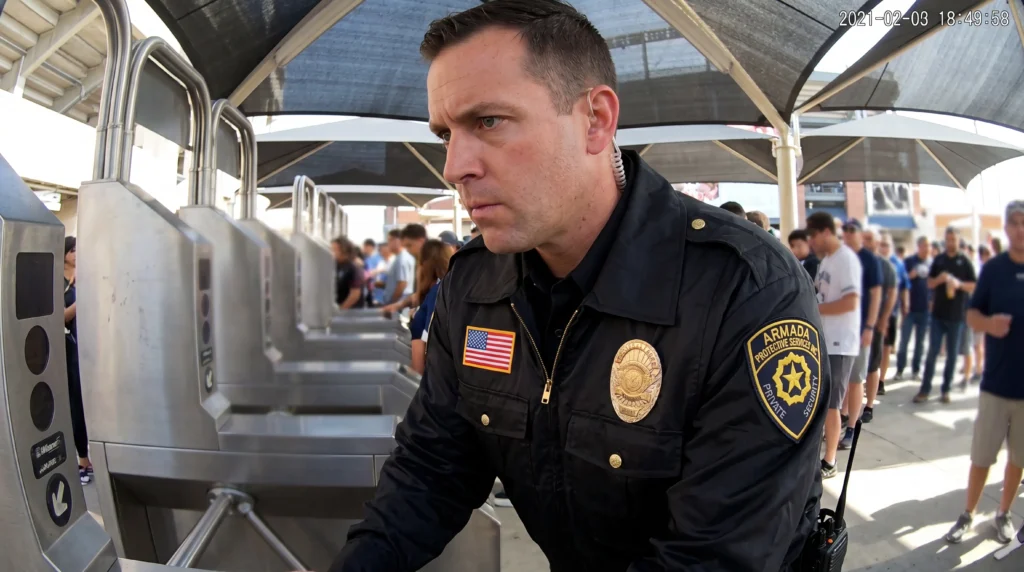
Event security san francisco is a specialized protection service that secures properties, assets, and crowds during recurring business gatherings in the city. Indeed, this service is vital because it helps property managers maintain safety, limit liability, and secure physical structures under long-term B2B contracts.
Key elements of a professional security plan include:
- Clear access control protocols at all entry gates.
- Systematic crowd management to prevent congestion.
- Fast incident response that coordinates with local police.
- Complete permit compliance with municipal regulations.
Consistent venue security is a highly professional service. Therefore, it protects guests, staff, and properties from risks at corporate events, conferences, and public gatherings. Armada Patrol delivers professional, contract-based security that San Francisco venues and property managers depend on. Specifically, we provide uniformed, BSIS-licensed officers trained in crowd control, access management, and emergency response.
Additionally, we are locally owned and operated. Our team has been serving the San Francisco Bay Area for over 30 years. As a result, we maintain active coordination with the San Francisco Police Department (SFPD). Consequently, our services are top-rated and 5-star rated by San Francisco property managers.
Furthermore, you invest heavily in your San Francisco properties. Therefore, we ensure your investment stays secure. Our officers are highly visible, professional, and ready for any situation.
Contact Armada Patrol
- Phone: (415) 533-5534
- Address: 701 Pennsylvania Avenue, Suite 108, San Francisco, CA 94107
- License: BSIS-licensed in California
Why Quality Event Security San Francisco Services Matter
San Francisco venues face ongoing security challenges from planning to daily operations. However, our local patrol provider services cover all security needs near your property. For example, we manage the following:
- Access Control: Verification of credentials and managing entry points at all San Francisco venue gates.
- Crowd Management: Controlling visitor flow, preventing overcrowding, and keeping lines orderly.
- Permit Compliance: Security screening that aligns with your local San Francisco venue permit requirements.
- Perimeter Patrol: Monitoring boundaries to prevent unauthorized entry onto your property.
- Incident Response: Rapid response by trained officers who coordinate with the SFPD when needed.
- Asset Protection: Securing equipment, buildings, and restricted zones under long-term B2B contracts.
In addition, our top-rated teams cover these needs with precise, protocol-driven service.
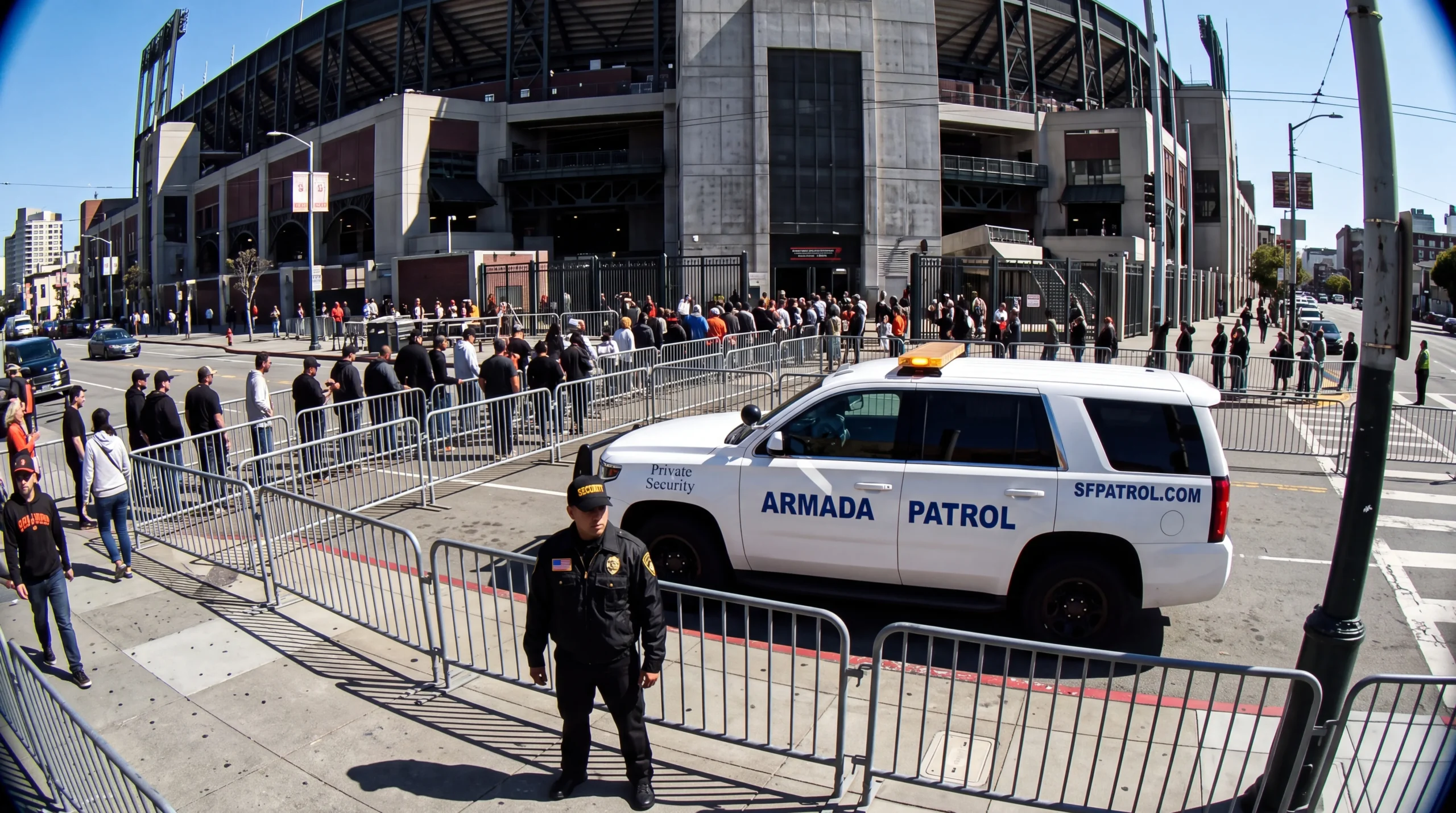
Types of Venues We Secure in San Francisco
Armada Patrol provides recurring contract security for venues and facilities across many categories. For instance, we secure:
- Corporate Venues and Conference Centers: Scheduled security for executive suites, meeting spaces, and business parks in the Financial District and SoMa.
- Public Event Grounds: Consistent perimeter security and crowd management for recurring community festivals.
- Entertainment and Concert Venues: Steady contract coverage for theaters, stadiums, and performance halls.
- Commercial Properties and HOAs: Dedicated access control and patrols for residential associations and retail plazas near your property.
- Trade Show Venues: Multi-day security coverage for convention spaces like the Moscone Center.
Therefore, we tailor our approach to fit the exact rules of your facility.
How Armada Patrol Plans Event Security San Francisco
Professional venue protection starts long before visitors arrive. Therefore, your Armada Patrol account manager reviews your facility layout, capacity, and permit rules. Additionally, we identify risks specific to your San Francisco neighborhood.
Specifically, we establish precise staffing levels based on your average attendance. Next, we write detailed post orders. Indeed, these cover patrol routes, static posts, and emergency plans. Furthermore, all officers receive detailed briefings before their shift starts. As a result, you receive a clear, written security plan for your property.
Security Staffing Levels for San Francisco Venues
We help you find the right officer count for your venue. For example, we recommend:
- Small Facilities: 2 to 4 officers for indoor properties with low foot traffic.
- Medium Venues: 4 to 10 officers depending on property layout and risk level.
- Large Venues: 10 to 25 officers for major sites requiring structured zones.
- Complex Sites: Custom plans with supervisors, mobile units, and dedicated zone officers.
Additionally, we are a top-rated security firm. Therefore, we recommend optimal staffing to manage risk and keep costs efficient.
Why San Francisco Property Managers Choose Armada Patrol
We provide dependable, protocol-driven security services. Indeed, here is why local businesses choose our team:
- BSIS-Licensed Officers: Every guard holds an active California BSIS guard card. In addition, we conduct thorough background checks and officer screening.
- Local Expertise: We are locally owned and operated. Furthermore, our firm has been serving the San Francisco Bay Area for over 30 years. We maintain active coordination with the SFPD.
- Robust Credentials: Armada Patrol holds California BSIS Private Patrol Operator license PPO 120526. Additionally, we carry comprehensive liability insurance. Our officers hold certifications in CPR, First Aid, and AED use.
- Verified Reviews: We are 5-star rated by San Francisco property managers. As a result, you can read our client testimonials to see our proven track record of reliable service.
Questions to Ask Before Hiring a Local Patrol Provider in San Francisco
When looking for security near your property, ask these key questions:
- Are all your guards BSIS-licensed with active California guard cards?
- Do you have years of experience securing San Francisco properties of this scale?
- How does your dispatch coordinate with the SFPD during an emergency?
- What officer screening and background checks do you require?
- Do you carry comprehensive liability insurance for your operations?
Consequently, these questions help you find a professional firm instead of uncertified contractors.
Frequently Asked Questions
What drives the cost of event security in San Francisco?
Cost is shaped by site size, guest count, entry control, patrol routes, hours on post, and the level of access your event needs. It also changes with risk, such as mixed public access, alcohol service, VIP areas, or tight parking and loading zones. We plan around clear post orders so you pay for the coverage your site needs, not guesswork.
How do you keep our event compliant with California rules and local site rules?
We are licensed by the State of California under BSIS Private Patrol Operator License PPO 120526. That license matters, but so do your site rules, fire lanes, access limits, and any HOA or property policy tied to the event. We work from clear post orders so our team follows your rules and keeps the site in line with the plan.
What should we look for if we want a reliable response when something goes wrong?
Look for a provider with clear chain of command, written post orders, and direct reporting steps for incidents. You want a team that can spot issues early, notify the right people fast, and stay calm under pressure. We keep our focus on documented action, so site leaders know what happened and what was done.
How fast can your team get on site, and what affects response time?
Response time depends on where the site is, how detailed the post is, and how much advance notice we have. San Francisco traffic, event access limits, and loading rules can all affect arrival and staging. The best results come when we review the site in advance and set a clear start time, entry point, and point of contact.
What can go wrong at an event if security is not set up well?
Common problems are poor access control, guest flow issues, missed parking signs, open side doors, and weak handoff at start and end of the event. Small gaps can turn into crowd strain, trespass, or a slow response when someone needs help. A clear plan, trained post coverage, and steady reporting reduce those risks before they spread.
